Akan River Fly Fishing Guide | Rainbow Trout Fishing in Hokkaido
The Akan River is one of the best-known fly fishing destinations in Eastern Hokkaido, Japan.
Flowing out of Lake Akan and through the forests of the Akan area, the river offers anglers the opportunity to target powerful rainbow trout in a beautiful natural environment.
Fly fishing the Akan River is very different from fishing Lake Akan.
Rainbow trout have long been an important part of the fishery, and the Akan River is known as one of Hokkaido’s relatively consistent trout fishing destinations.
However, having a healthy trout population does not mean the fishing is always easy.
Water temperature, current, insect activity, weather, and trout behavior can all change where the fish hold and how they feed.
The most effective fishing techniques also change throughout the season.
Depending on the conditions, anglers may use dry flies, nymphs, or streamers. Being able to adapt your approach is an important part of successfully fishing the Akan River.
We provide private fly fishing guide services throughout Eastern Hokkaido, including the Akan area.
In this guide, we introduce the best seasons for fly fishing the Akan River, rainbow trout fishing, effective fly fishing techniques, recommended tackle, fishing regulations, access, and how to include the Akan River in a multi-day fly fishing trip through Hokkaido.
What Fish Can You Catch in the Akan River?
Rainbow Trout
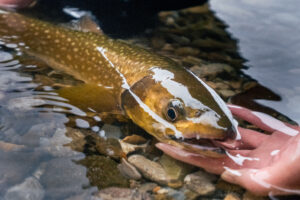
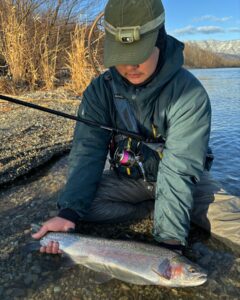
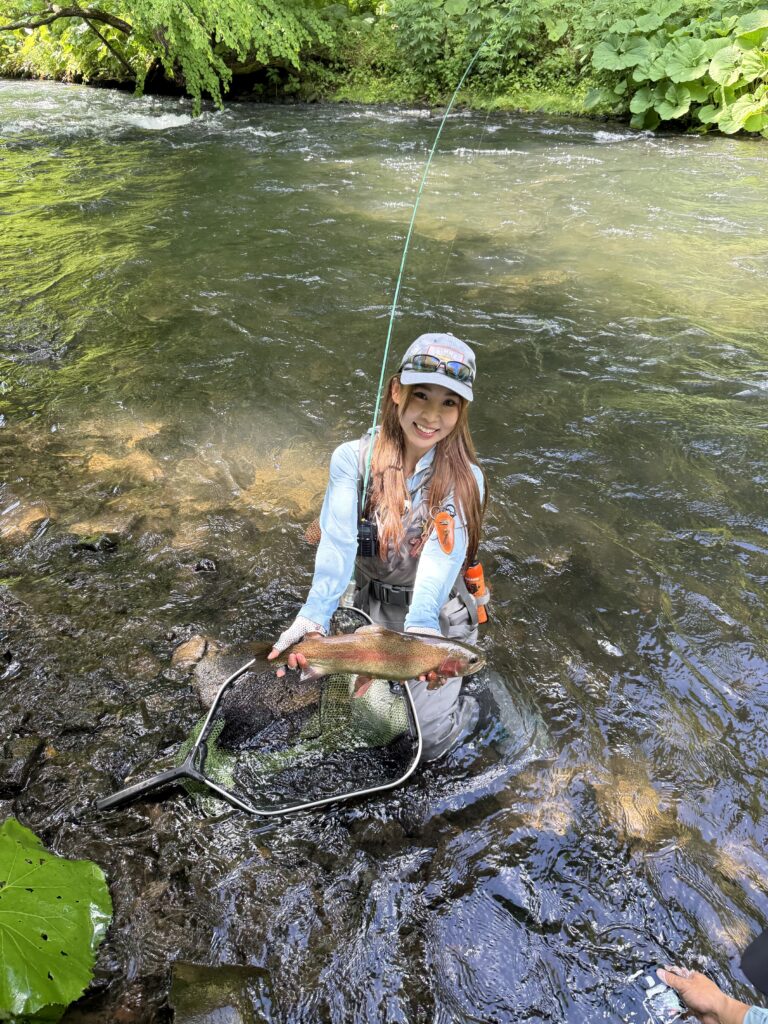
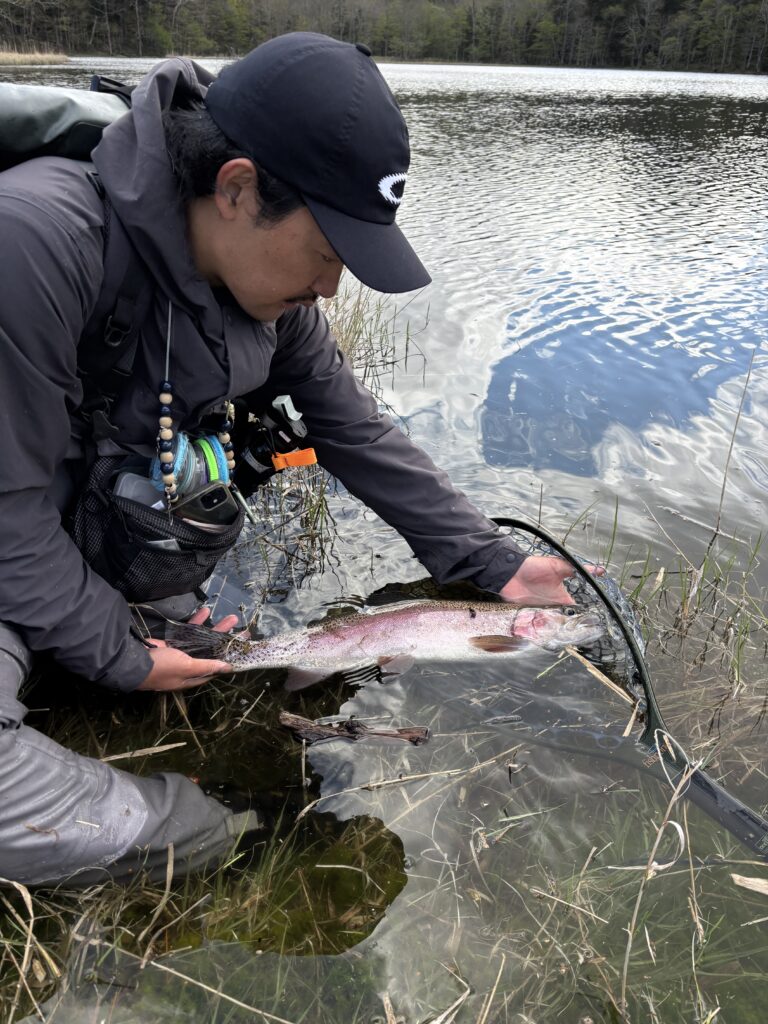
Rainbow trout are one of the main targets for fly anglers on the Akan River.
They are powerful fish and can provide exciting fights with strong runs.
Under the right conditions, sight fishing for larger rainbow trout is also possible.
Depending on the season and conditions, rainbow trout can be targeted with dry flies, nymphs, and streamers.
Rather than relying on one technique, it is important to understand where the trout are holding, what they are feeding on, and adjust your presentation accordingly.
Best Season for Fly Fishing the Akan River
The Akan River generally provides relatively consistent fishing from the opening of the season in May until the end of the fishing season in autumn.
This makes it a destination that can be enjoyed throughout much of the Hokkaido fishing season.
May | Early Season
May marks the beginning of the main fishing season.
Hokkaido can still be cold at this time of year, particularly in the mornings and evenings.
Depending on water temperature and trout activity, subsurface techniques with nymphs and streamers can be important.
June | Early Summer Fly Fishing
June is one of the most interesting months for fly fishing in the Akan area.
As temperatures rise, aquatic insect activity increases.
Under the right conditions, trout begin to focus more on the surface, creating opportunities for dry fly fishing.
When trout are feeding below the surface, nymph fishing remains an important option.
July to August | Summer Fishing
During summer, trout behavior can change significantly.
This is a good time to stay mobile and cover water to find actively feeding fish.
Rather than staying in one location, we prefer to observe the current conditions and search for the areas that offer the best fishing opportunities on that particular day.
September | Beginning of Autumn
September marks the transition into autumn fishing.
As temperatures begin to fall, trout behavior gradually changes.
Weather and water conditions can vary considerably from day to day, so it is useful to be prepared to fish dry flies, nymphs, and streamers.
October | Autumn Trout Fishing
Autumn is one of the most interesting periods for trout fishing in Eastern Hokkaido.
Temperatures become much colder, but trout can be active and in excellent condition.
Proper cold-weather clothing is extremely important during this period.
Morning temperatures can be very low, and the weather in Hokkaido can change quickly.
Best Fly Fishing Techniques for the Akan River
The most effective technique depends on the season, water conditions, insect activity, and trout behavior.
Being able to change your approach throughout the day can make a significant difference.
Dry Fly Fishing
Dry fly fishing can be extremely exciting when trout are actively feeding near the surface.
From June through September, we definitely recommend trying larger dry flies when conditions are suitable.
Before selecting a fly, observe the insects around the river and look for rising or surface-feeding trout.
Presentation is also extremely important.
Try to avoid unnatural drag and allow the fly to drift naturally through the trout’s feeding lane.
On days when the trout are particularly active, you may see fish repeatedly coming to the surface to take flies.
Nymph Fishing
Nymph fishing is extremely effective when trout are feeding below the surface.
One of the most important factors is controlling the depth of the fly.
Adjust the weight, leader, indicator, and presentation according to the depth and speed of the current.
Reading the river and understanding where trout are likely to hold is also important.
The trout can respond to a wide variety of nymph patterns, so do not be afraid to experiment with different flies.
Streamer Fishing
Streamers can be effective for searching for active trout and covering larger areas of water.
Retrieve speed, fly movement, depth, and presentation can all affect how trout respond.
Changing the casting angle and retrieve speed can help you find the most effective presentation for the conditions.
Recommended Fly Fishing Tackle for the Akan River
For the Akan River, a #4 to #6 fly rod is a versatile choice for a wide range of conditions.
A lighter rod can be enjoyable when focusing on dry fly fishing, while a #5 or #6 rod provides more versatility for nymphs and streamers.
The ideal fly line, leader, and fly selection will depend on the conditions and fishing technique.
Waders, appropriate wading boots, polarized sunglasses, and waterproof clothing are also important.
Spring and autumn in Eastern Hokkaido can be much colder than many international visitors expect.
We strongly recommend bringing adequate warm clothing.
Akan River Catch-and-Release Area and Fishing Rules
The Akan River has a designated catch-and-release section.
According to published official information, the section from the outlet of Lake Akan downstream to the lower end of Yukan Bridge is designated as catch-and-release water.
Bait fishing is prohibited in this section, and barbless hooks are required.
Regulations concerning the fishing season, permitted tackle, fishing fees, and fishing areas may change, so always check the latest official information before fishing.
Proper catch-and-release practices and careful fish handling are important for protecting Hokkaido’s trout fisheries for the future.
Akan River Fishing License
A fishing license is required to fish the Akan River.
According to official information published for the 2025 season, the daily fishing fee was JPY 1,500.
However, fishing fees, seasons, and regulations may change from year to year.
Always check the latest official information before your trip.
When fishing with our guide service, we can also help explain the current local fishing regulations before your trip.
Lake Akan vs. Akan River Fly Fishing
Lake Akan and the Akan River offer two very different styles of fly fishing.
On Lake Akan, anglers need to consider wind, trout movement, fishing depth, insect activity, and how to effectively cover a large area of still water.
On the Akan River, anglers read currents, pools, seams, changes in depth, structure, and the places where trout are likely to hold.
Fishing both during the same trip gives anglers the opportunity to experience two very different styles of Hokkaido fly fishing.
Depending on the season and current conditions, we may recommend fishing the lake, the river, or another destination in Eastern Hokkaido.
How to Get to the Akan River
The Akan River is located near Lake Akan in Eastern Hokkaido.
For international travelers, Kushiro Airport is one of the most convenient gateways to the Akan area.
Memanbetsu Airport is another useful option for anglers planning to combine the Akan area with Lake Kussharo, Shiretoko, Abashiri, and other destinations in Eastern Hokkaido.
Because Hokkaido’s fishing destinations are spread across a very large area, renting a car is recommended if you plan to visit multiple locations.
Combining the Akan River With an Eastern Hokkaido Fly Fishing Trip
One of the biggest advantages of fishing in Eastern Hokkaido is the variety of fishing environments available.
A multi-day fly fishing trip can include the Akan River, Lake Akan, Lake Kussharo, rivers throughout Eastern Hokkaido, and the Shiretoko area.
We prefer not to completely fix every fishing location months before a trip.
Instead, we consider the actual weather, rainfall, water temperature, river conditions, and trout activity before deciding where to fish.
For anglers traveling a long distance to Hokkaido, we believe that finding the best fishing available during the trip is often more important than fishing the same river every day.
Guided Fly Fishing on the Akan River
We provide private fly fishing guide services throughout Eastern Hokkaido.
Our trips are suitable for experienced fly anglers as well as visitors trying fly fishing in Hokkaido for the first time.
Depending on the season, target species, weather, and current fishing conditions, we can also create multi-day fishing itineraries combining the Akan area with other destinations throughout Eastern Hokkaido.
Fly rods, waders, and other fishing equipment can also be rented with advance notice.
If you are planning a fly fishing trip to Hokkaido, please contact us with your travel dates, number of anglers, fishing experience, and target species.
We can recommend a fishing plan based on the season and current conditions.
Akan River Fly Fishing FAQ
What is the best month to fly fish the Akan River?
The best time depends on the type of fly fishing you want to experience.
Spring, early summer, and autumn each offer different conditions and fishing styles.
June can provide excellent insect activity and opportunities for dry fly fishing, while autumn is another important season for trout fishing in Eastern Hokkaido.
How big are the rainbow trout in the Akan River?
The size of the trout varies depending on the individual fish and conditions.
Rather than promising a particular size, we recommend experiencing the Akan River for its natural environment, river fishing, and the opportunity to target Hokkaido rainbow trout using a variety of fly fishing techniques.
Can beginners fly fish the Akan River?
Yes.
However, river fly fishing requires casting, line control, wading, and the ability to understand currents.
Fishing with a guide can help beginners learn basic casting, presentation, river reading, and safe wading while enjoying their first Hokkaido fly fishing experience.
Do I need a fishing license for the Akan River?
Yes.
A fishing license is required to fish the Akan River.
Fees and regulations may change, so always check the latest official information before fishing.
Is the Akan River catch and release?
The Akan River has a designated catch-and-release section.
The section from the outlet of Lake Akan to the lower end of Yukan Bridge is designated as catch-and-release water.
Regulations and boundaries may change, so always check the latest information before your trip.
What weight fly rod should I use on the Akan River?
A #4 to #6 fly rod is a versatile choice for many situations on the Akan River.
The ideal setup depends on whether you plan to primarily fish dry flies, nymphs, or streamers.
Can I fish Lake Akan and the Akan River on the same trip?
Yes.
Lake Akan and the Akan River can easily be combined as part of a fishing trip in the Akan area.
For a longer Hokkaido fishing trip, you can also combine the Akan area with Lake Kussharo, Shiretoko, and other trout fishing destinations throughout Eastern Hokkaido.